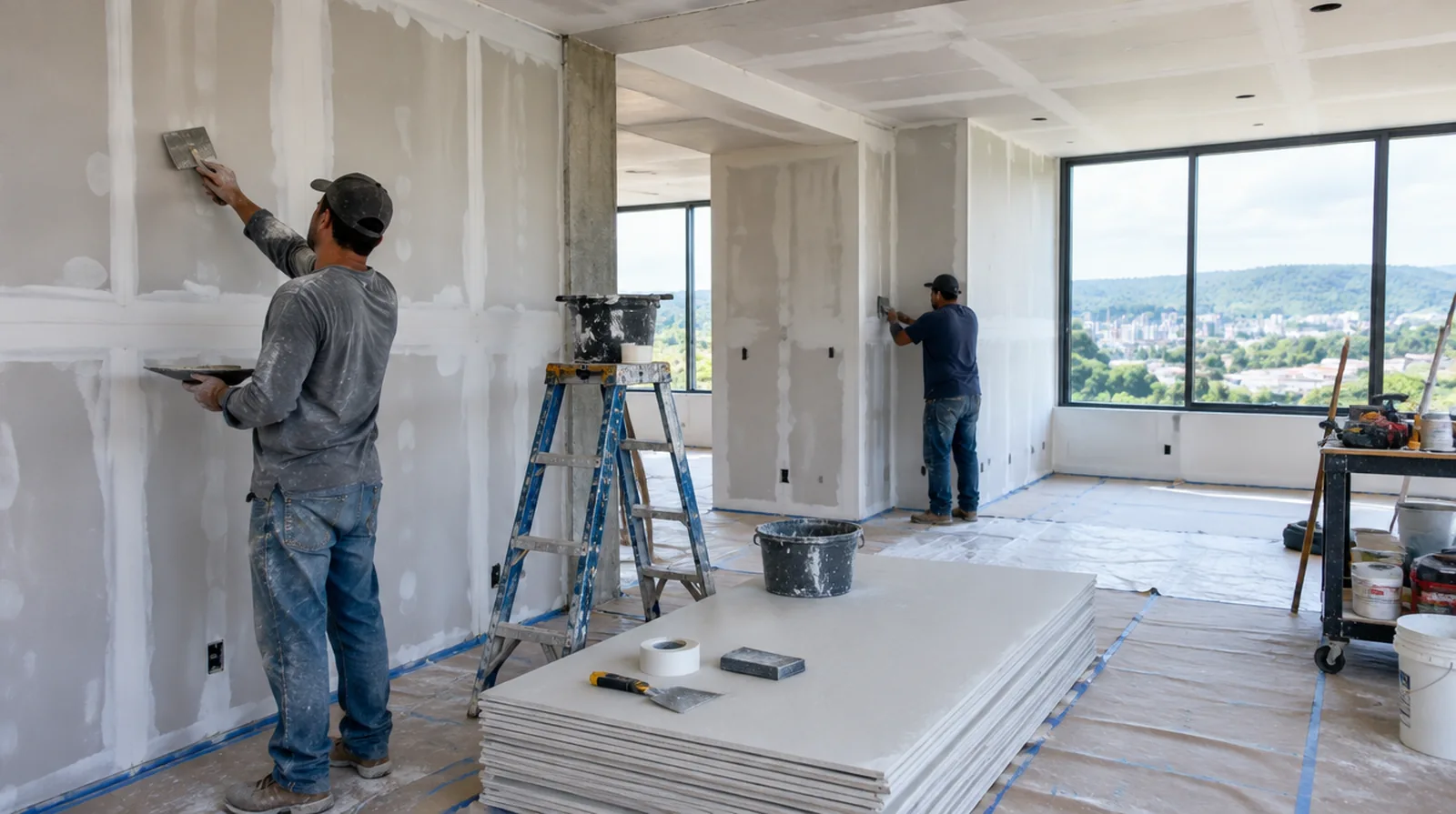
Use appropriate primer
A new texture and the painted wall around it can take up paint unevenly. A suitable primer helps the paint system perform consistently without changing the texture profile unnecessarily. For a project with several trades, agree which inspection or handover point must happen before the next person starts work.
Study the paint layers
Repeated painting can soften an old pattern and change how its peaks reflect light. Matching the wall as it looks now may require a differing application from the pattern that was first installed. When damage followed other building work, describe the nearby alterations and the sequence between those changes and the first visible defect.
Identify the existing pattern
First determine how the current texture creates its pattern and relief. Examine the surface in the light the room actually receives before choosing a spray or hand applied method. When building management controls access, agree delivery hours and common area protection before committing to a start or finish date.
Protect surrounding finishes
Mask adjacent materials against sprayed compound and other application debris. Protect the full reach of the operation, including fittings and trim beyond the original damaged spot. At a ceiling or wall containing fittings, assign removal and reinstatement duties for the affected devices before repair access is needed.
Allow time before painting
Applying paint before the texture has dried can disturb the pattern or produce uneven absorption. The quote should explain whether the next decorating stage is included or left to a painter. If there is a fixed move in date, reserve enough time for the coating stages after drywall work rather than counting only the installation period.
Blend beyond the patch
A sharp rectangular transition can expose the repair even when the new pattern is otherwise similar. Gradually extending the texture into the surrounding surface may make the blend less abrupt. When damage followed other building work, describe the nearby alterations and the sequence between those changes and the first visible defect.
Control application conditions
Compound consistency and application distance affect how a sprayed pattern lands on the wall surface. A knockdown pass also depends on when the applied material reaches the right condition in that room. Where the quoted work stops before painting, request a well defined description of what remains so the next decorating stage can be priced realistically.
Consider hand applied surfaces
For a troweled pattern, the tool movement and the spacing between its marks matter. A representative trial is useful when there is no standard machine setting that reproduces the current finish. For a surface that will receive wall covering, share the product requirements early so the finishing stage supports the planned decorative treatment.
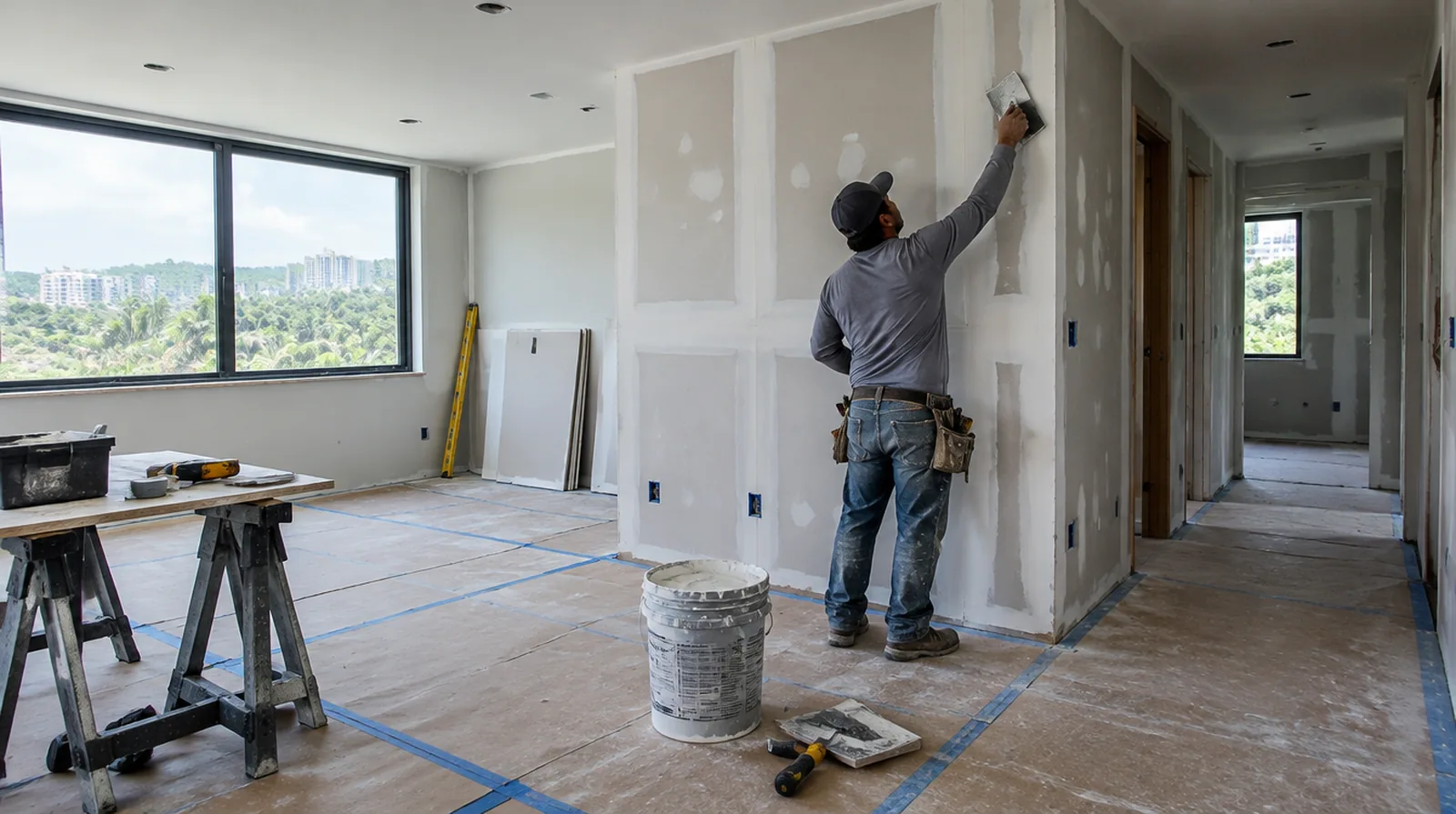
Check the underlying repair
A decorative pattern will not reliably disguise a ridge or an uneven board joint underneath it. Complete a stable level repair before trying to reproduce the surrounding texture. If the coating stability is unclear, assess which layers are adequately bonded and which ought to be removed instead of simply hidden beneath new material.
Judge from normal positions
Close inspection of a wet sample is less useful than reviewing the dry finish from ordinary room viewpoints. The planned decorative paint sheen and oblique light both belong in the final appearance discussion. If occupancy must resume on a certain day, include the later primer and paint stages in the timetable as well as drywall installation and finishing.
Project context in Guaynabo
Where a new partition meets a concrete ceiling, a flexible joint detail helps prevent a recurring crack. Shorter board lengths may be needed to fit a service elevator in a Guaynabo high-rise.
Scope questions before finishing
Where flooring is staying in place, agree on protective coverings and check that tools and material handling will not damage the visible finish.
If occupancy must resume on a certain day, include the later primer and paint stages in the timetable as well as drywall installation and finishing.
At a repair beside an opening, allow clearance for moving board through the doorway and space to use the finishing tools effectively.
For a surface carrying numerous paint layers, discuss whether differences in the retained profile or sheen justify decorating a broader area.
If the decorative coating is already chosen, share its sheen and color early because those choices influence how surface preparation is judged.
When reviewing the finished work, use the agreed lighting and natural room viewpoints so the assessment reflects the intended use of the space.
If the ceiling or wall includes fittings, identify the person responsible for removing and reinstalling each item before the work begins.
When a wall has repeated defects, keep a record of earlier repair attempts so a new assessment does not simply repeat an unsuccessful approach.
If a room has only limited ventilation, discuss how the finishing materials can dry without disrupting comfort or spreading dust elsewhere.
When the history of a repair is uncertain, note when it became noticeable and whether its appearance has altered across differing seasons.
For a repair that crosses several surfaces, measure the affected planes separately so the estimate can explain where each finishing treatment starts and stops.
If there is a fixed move in date, reserve sufficient time for the coating stages after drywall work rather than counting only the installation period.
Explore the Guaynabo drywall overview for related options, or read the project planning information before arranging the next stage.
More planning details for Guaynabo
Drying time between coats here depends on keeping the room closed and the air conditioning running. A mold-resistant primer before paint helps gypsum walls hold up in Guaynabo's steady humidity. Guaynabo homes are mostly concrete, so drywall work usually involves interior partitions and ceilings that meet masonry.