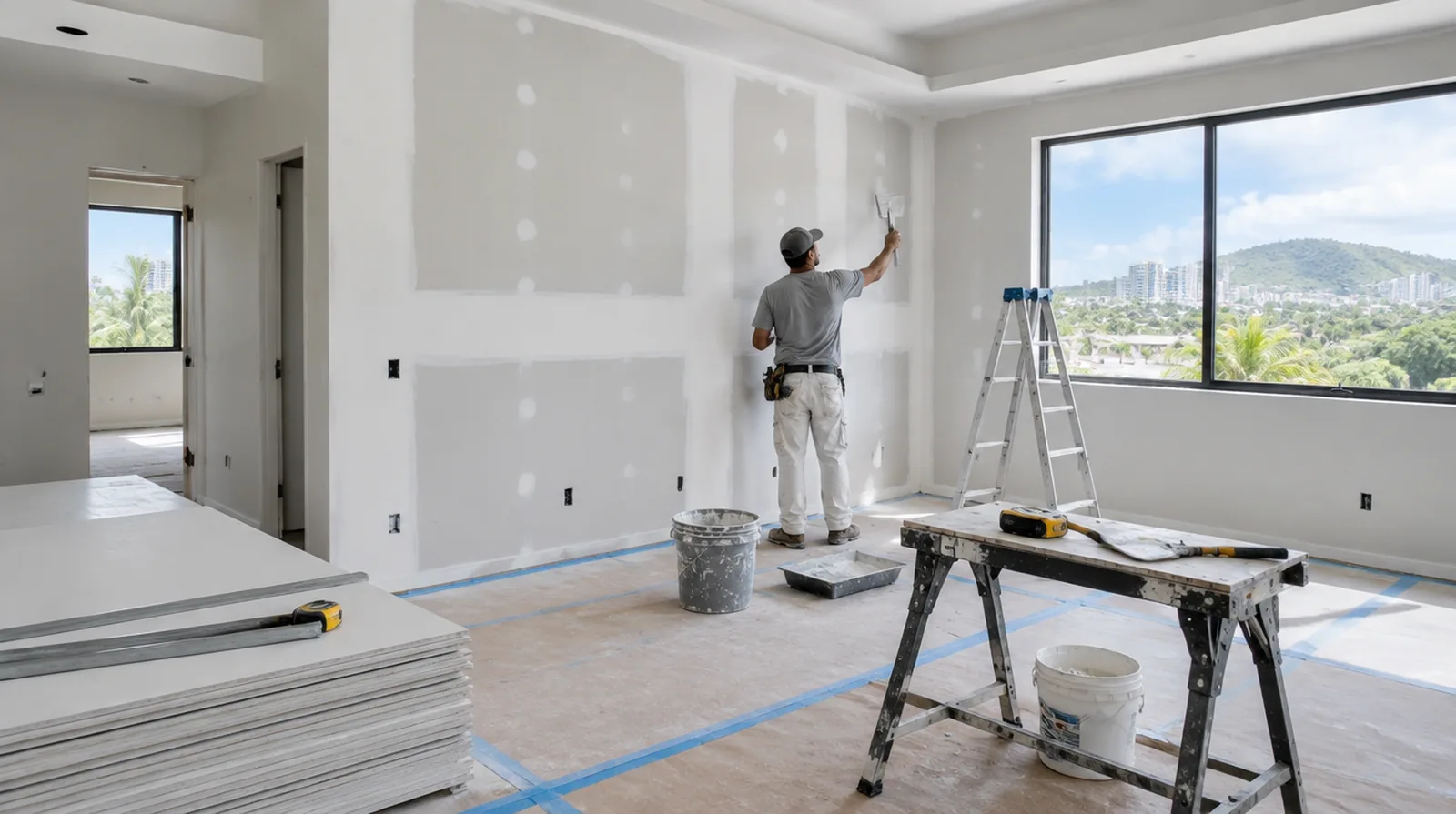
A plan built around the room, not only the patch
Good preparation is what allows a drywall finish to stay in the background of a completed room. For concrete-home interior refurbishment in Guaynabo, Guaynabo Drywall Company explains the relationship between damaged panels, joint treatment and the later paint system. Look beyond the outline of a blemish when deciding the repair scope. The surrounding board must be sound, its supports must be adequate and any known water source must already be addressed. The final lighting and decorative sheen also influence how extensive the finishing should be. Putting those decisions together provides a more useful starting point than selecting a service solely from the visible size of a hole.
Soundproof Drywall: review the whole assembly
Board layers, framing, insulation and edge details all contribute to acoustic behavior. Select a suitable tested or documented wall system rather than combining unrelated marketing specifications. For this part of the project, review the finish from ordinary room positions using the lighting conditions that were agreed for the work. See the soundproof drywall guide for the scope questions, preparation stages and finishing decisions specific to that work.
Ceiling Repair: review the room after drying
Once the coats are dry, view the ceiling from normal room positions and near its principal windows. Record any remaining paint preparation before the protection comes down and the interior returns to use. For this part of the project, agree delivery hours and common area protection before committing to a start or finish date. See the ceiling repair guide for the scope questions, preparation stages and finishing decisions specific to that work.
Water Damage Drywall Repair: match the board assembly
Replacement board should suit the original thickness and any applicable wall or ceiling assembly requirements. Changing to a moisture resistant board does not excuse leaving the original water problem unresolved. For this part of the project, review the finish from ordinary room positions using the lighting conditions that were agreed for the work. See the water damage drywall repair guide for the scope questions, preparation stages and finishing decisions specific to that work.
Drywall Finishing: use controlled sanding
Use sanding to refine minor imperfections instead of reshape an unnecessarily heavy joint. Dust management remains necessary even when only a limited number of seams are being finished. For this part of the project, set a workable boundary around construction while retaining the access people need for normal daily activities. See the drywall finishing guide for the scope questions, preparation stages and finishing decisions specific to that work.
Popcorn Ceiling Removal: plan cleanup and reopening
Allow for debris removal, drying and decorating rather than assuming the space is complete immediately after scraping. Allow for drying and painting time instead of assuming the space is usable immediately after scraping. For this part of the project, review a dried trial from the side in addition to the normal straight view of the wall. See the popcorn ceiling removal guide for the scope questions, preparation stages and finishing decisions specific to that work.
Commercial Drywall: define the tenant scope
Establish the partition layout and intended room uses before measuring a tenant improvement. Separate owner responsibilities from tenant responsibilities so the proposal covers a defined package of work. For this part of the project, settle the sequence with flooring, trim and cabinet work before setting a final finishing date. See the commercial drywall guide for the scope questions, preparation stages and finishing decisions specific to that work.
Drywall Installation: treat perimeter details
Connections to adjoining surfaces are part of the wall detail, not merely decorative gaps. The relevant fire or acoustic assembly may specify particular perimeter seals and treatments. For this part of the project, allow for an assessment that can distinguish stable material from layers that should never be covered. See the drywall installation guide for the scope questions, preparation stages and finishing decisions specific to that work.
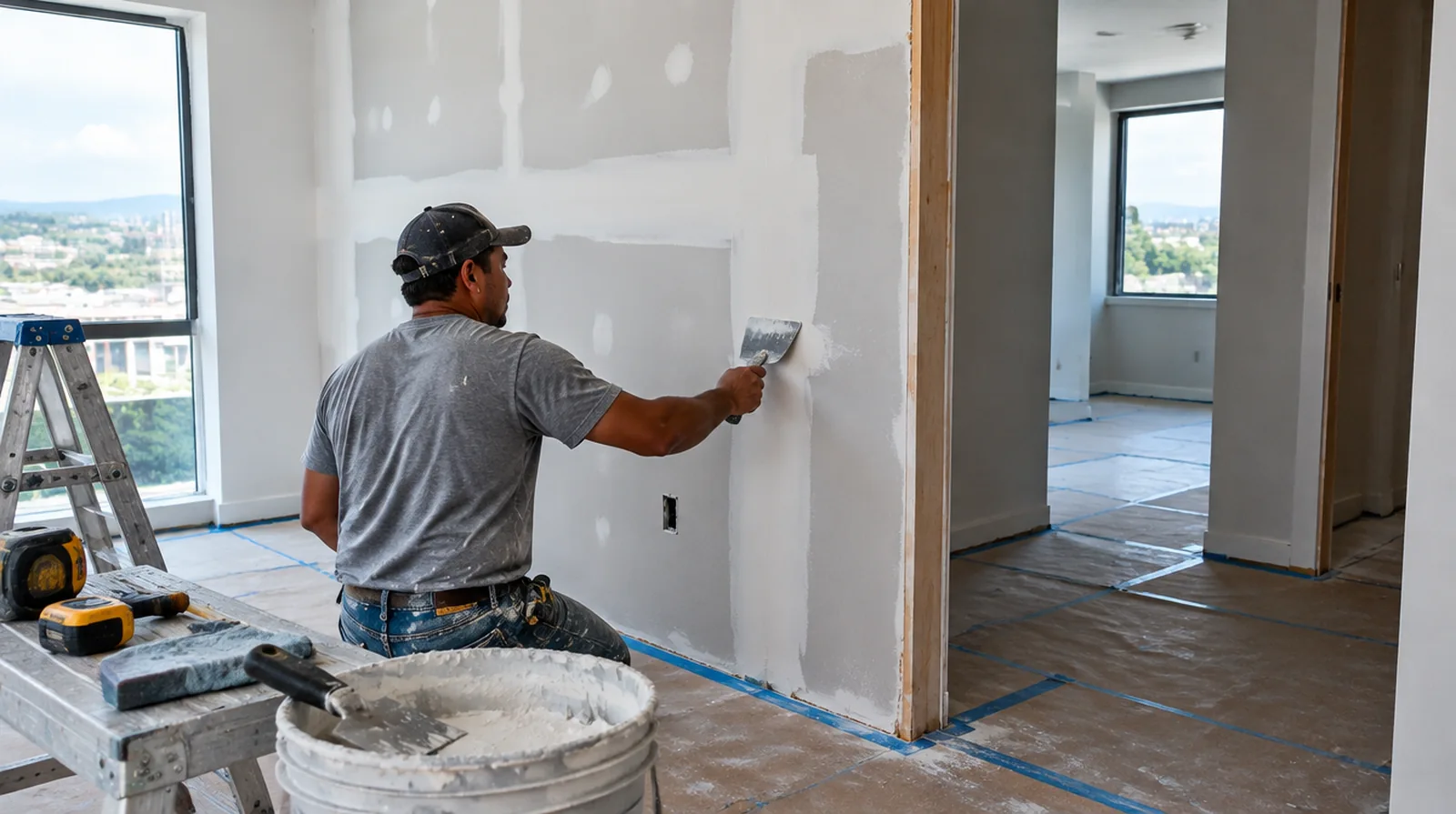
Skim Coating: let each coat dry
Allow each application to become ready for the next under the space conditions actually maintained. A rushed next coat can drag or disturb material that has not set up sufficiently. For this part of the project, confirm access hours and protection requirements before promising a start date or a short completion window. See the skim coating guide for the scope questions, preparation stages and finishing decisions specific to that work.
Drywall Repair: choose the patch boundary
Loose paper and crumbling gypsum must be removed until the surrounding panel can support a durable repair. Squaring an opening could produce a workable edge for backing and a securely fitted replacement. For this part of the project, assess the complete package of access and protection rather than relating cost only to the opening size. See the drywall repair guide for the scope questions, preparation stages and finishing decisions specific to that work.
Texture Matching: allow time before painting
Let a new texture become ready for decoration rather than applying paint onto soft material. The quote should explain whether the next decorating stage is included or left to a painter. For this part of the project, establish how additional findings and any proposed removal will be recorded before the scope changes. See the texture matching guide for the scope questions, preparation stages and finishing decisions specific to that work.
Access and drying conditions in Guaynabo
A workable schedule is based on more than the number of hours spent holding tools. Consider gated driveways and upper-floor units, where materials can stay dry and how occupants will move around the protected area. With warm humid weather year round, the finishing process still depends on suitable indoor conditions and adequate intervals between coats. In Guaynabo, a project involving choosing moisture-resistant board for humid rooms should identify the point when the underlying assembly is ready before new board or compound conceals it. If other rooms stay occupied, separate the working boundary from the access that daily routines require. If the property is empty, agree how the broader space can be used without risking retained floors or fittings.
Compare the same finishing boundary
Price has context only when the intended result is described clearly. Check whether the work ends with hung board, finished joints or a surface ready for decoration. Review the support at replacement edges and the amount of surrounding material included in the blend. Then discuss the parts that are easily overlooked: access preparation, cleanup, primer and the work of disconnecting or reinstating fittings. Some of those tasks may belong to another trade, which is useful to know before a start date is agreed. An unexpected condition should be assessed openly and added to the scope only after its effect has been explained.
Arrange the information before the next step
A useful project description combines the room context with a clear view of the defect. Include approximate measurements and identify the ceiling height, nearby fittings and any access limitation. Explain what you know about previous repairs or water exposure without disturbing suspect material to obtain a photograph. Describe the intended paint or wall covering if that decision is already made. These details make an assessment more focused, while leaving concealed conditions to be checked properly on site. The contact page provides the business address and city map. Quote requests can be sent with the form; the telephone displayed on this preview is not a working number.
Read about the project approach or view contact and planning details.
More planning details for Guaynabo
Condo buildings in Guaynabo often require elevator padding and set contractor hours before work begins. Condensation near split air conditioners can stain gypsum ceilings in humid Guaynabo rooms. Gated urbanizations in Guaynabo require visitor registration, so share access details before the first visit.