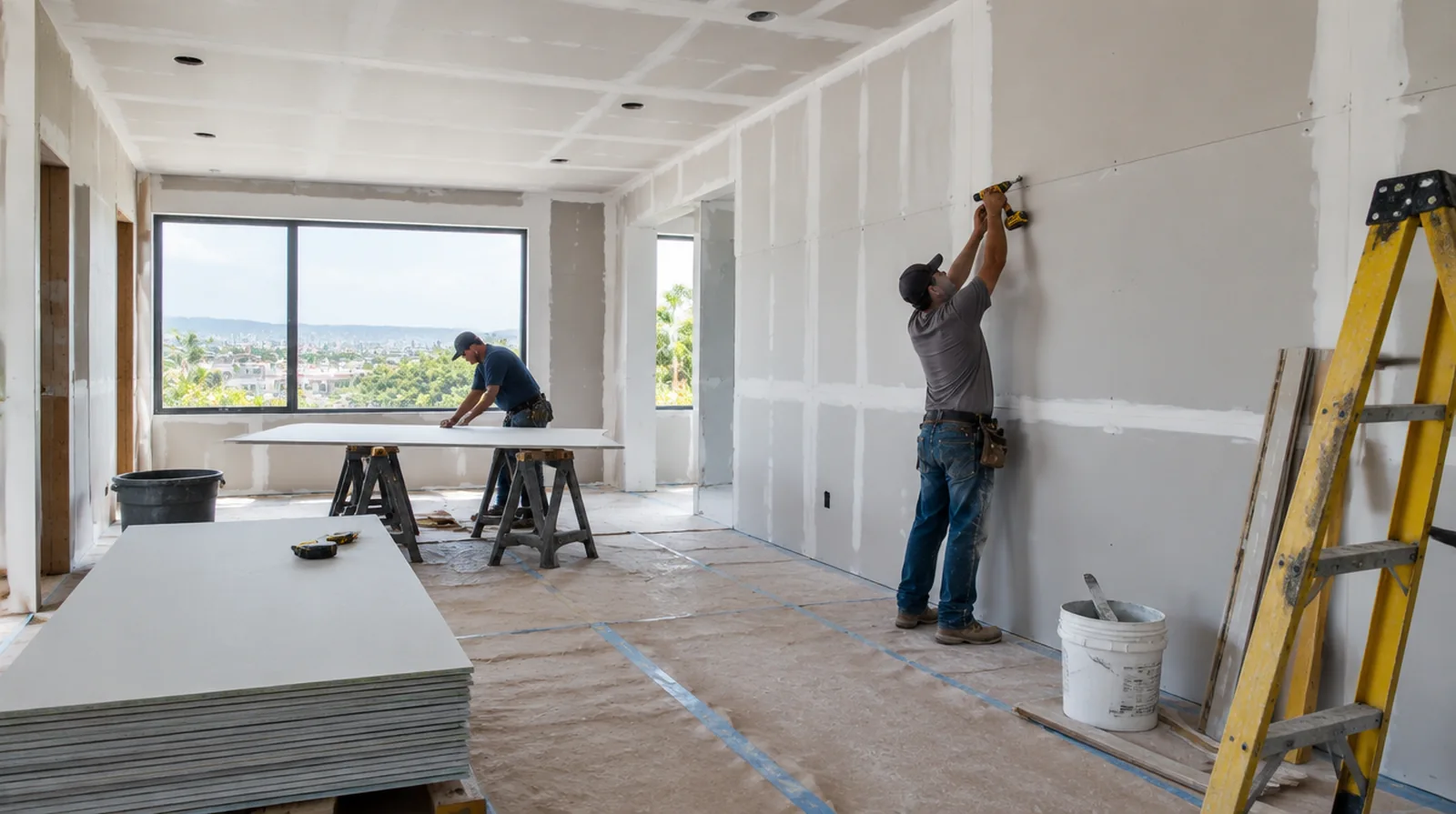
Confirm concealed work
Required checks on concealed services and insulation ought to be completed while the wall surface remains open. Photographs and a written readiness check help avoid opening a newly installed wall later. Where a finished perimeter is prominent, decide whether trim stays in position or is removed before agreeing how the new surface meets that edge.
Plan deliveries and access
The route into the property places limits on sheet handling that the wall surface dimensions do not show. Allow for stairs, tight turns and storage when assessing material movement and installation labor. For a room that stays in use, set a workable boundary around construction while retaining the access people need for normal daily activities.
Define the finish level
Hanging board and delivering a ready for painting wall are distinct stages that should be described separately. The chosen sheen and grazing light conditions may require a higher surface standard in a prominent room. While a removed panel exposes the wall cavity, complete the necessary review of concealed work before replacement board closes the opening.
Treat perimeter details
Connections to adjoining surfaces are part of the wall detail, not merely decorative gaps. The relevant fire or acoustic assembly may specify particular perimeter seals and treatments. For a room that stays in use, set a workable boundary around construction while retaining the access people need for normal daily activities.
Control fastening depth
Proper fastening holds the gypsum securely while leaving its face paper intact. Repair overdriven fixings or inadequate edge support rather than expecting finishing coats to conceal those defects. If the finish paint is already chosen, share its sheen and color early because those choices influence how substrate preparation is judged.
Inspect supporting framing
Drywall follows the framing underneath it, so bowed studs or uneven backing can show through the completed surface. Straightening or correcting support belongs in the scope before new sheets cover the wall. When the history of a repair is uncertain, note when it became noticeable and whether its appearance has altered across distinct seasons.
Lay out the joints
A thoughtful sheet layout limits awkward seams and keeps weak transitions away from the corners of openings. A sensible panel pattern makes both the fastening stage and the later joint treatment more straightforward. When panel replacement exposes a cavity, resolve any required inspection before that opening is closed and the finishing work begins.
Inspect before decoration
Review dry finished walls while their edges remain noticeable and before fixed furnishings obstruct access. Use the agreed lighting and note any further preparation the painter should expect. For work spread across differing planes, record their dimensions separately and describe the boundary of the treatment on each surface.
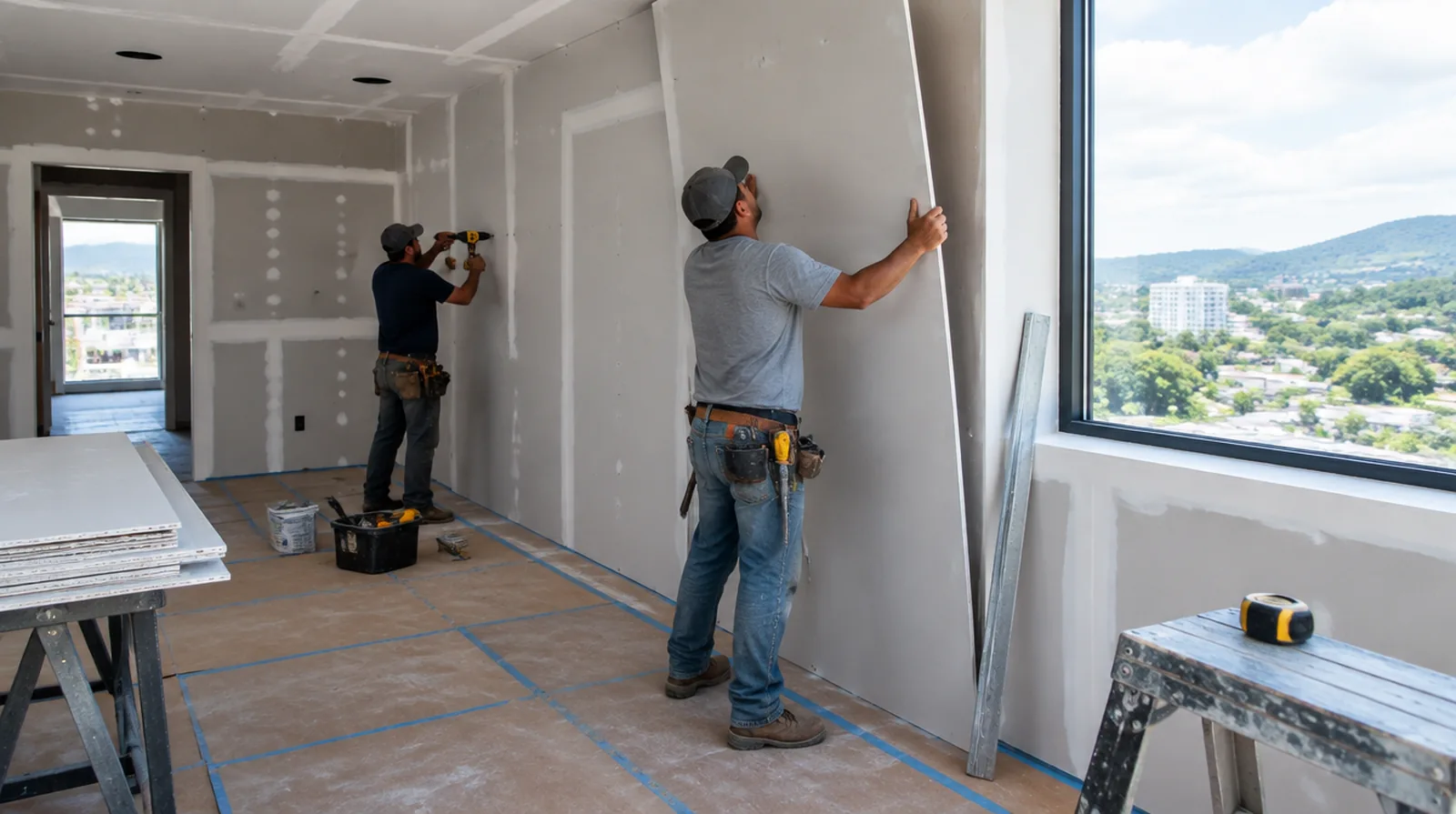
Measure the complete assembly
Board quantities depend on wall height, ceiling coverage, openings and the proposed orientation of the sheets. A measured layout helps reduce narrow infill strips and unneeded joints around doors. Where a future fixture will be installed, coordinate any required backing while the cavity is accessible rather than reopening the completed wall.
Fit corners and openings
Door returns and exposed corners require a straight consistent edge before the final compound coats are applied. The corner profile should be selected to match the intended appearance and the expected wear. When a wall has repeated defects, keep a record of earlier repair attempts so a new assessment does not simply repeat an unsuccessful approach.
Project context in Guaynabo
Condo buildings in Guaynabo often require elevator padding and set contractor hours before work begins. Guaynabo homes are mostly concrete, so drywall work usually involves interior partitions and ceilings that meet masonry.
Scope questions before finishing
If the wall work belongs to a broader renovation, coordinate its order with flooring, cabinetry and trim rather than scheduling finishing in isolation.
Where occupants have dust sensitivity concerns, agree containment and cleaning measures before settling the way the room will be staged.
When photographs are used for an initial discussion, include a wide room view as well as a close view so scale and surrounding finishes are understandable.
If the current finish is unusual, keep a small reference sample or a close photograph to support the discussion about blending and restoration.
When the same defect has returned, share information about previous repair methods so the next assessment can consider why they did not last.
If there is a fixed move in date, reserve sufficient time for the coating stages after drywall work rather than counting only the installation period.
For a project involving a building manager, confirm access hours and protection requirements before promising a start date or a short completion window.
When reviewing the finished work, use the agreed lighting and natural room viewpoints so the assessment reflects the intended use of the space.
If scheduling is the main concern, separate hands on labor from drying intervals instead of treating every visit as a full day of active work.
Where the wall surface meets fixed furniture, clarify whether removal is included or whether the finish will terminate at the accessible edge.
Where a finished perimeter is prominent, decide whether trim stays in position or is removed before agreeing how the new surface meets that edge.
If the problem developed after another renovation, explain which nearby materials or building systems changed before the damage became visible.
Explore the Guaynabo drywall overview for related options, or read the project planning information before arranging the next stage.
More planning details for Guaynabo
Condensation near split air conditioners can stain gypsum ceilings in humid Guaynabo rooms. Drying time between coats here depends on keeping the room closed and the air conditioning running. After a storm, wet gypsum and rusted track should be removed completely before new board is installed.